On-Farm Food Loss & Agricultural Recovery

Farm-stage food loss accounts for more food lost than at the retail and consumer levels combined. Targeted policies can turn surplus crops into a resource for communities in need.

Atlas Research: On-Farm Food Loss & Agricultural Recovery

Issue Brief Icon

Issue Brief

This brief analyzes the policies, incentives, and infrastructure gaps that contribute to on‑farm food loss worldwide and highlights best practices to reduce waste and expand farm‑stage food donation.

It offers actionable recommendations to help farmers, food recovery organizations, and policymakers work together to divert surplus crops to food‑insecure communities.

Read the Brief

Best Practices: On-Farm Food Loss & Agricultural Recovery

All countries should implement the following best practices to ensure that edible surplus food is not lost or wasted due to policy gaps, economic barriers, or lack of coordination:

Legislation icon

Include On-Farm Loss in National Food Waste

Explicitly integrate agricultural production into national food loss and waste strategies, with measurable sector-specific targets, dedicated funding for postharvest infrastructure, and mechanisms for engaging producers in program design.

Tax Incentives and Barriers Icon

Incentivize On-Farm Donation with Tax Policy

Establish tax credits or enhanced deductions for the donation of surplus agricultural products, including coverage of harvest, packaging, storage, and transportation costs, with simplified valuation methods that reflect real production costs.

Donation icon

Connect Farms to Food Recovery Organizations

Act as a convener between farmers and food banks by funding operational costs of agricultural recovery, embedding surplus produce into formal social support systems, and using direct procurement to rapidly mobilize surplus for hunger relief.

Countries with Strong Policies: On-Farm Food Loss & Agricultural Recovery
Australia

Australia’s National Food Waste Strategy explicitly targets the agricultural production stage, setting sector-specific reduction goals and linking producers to food recovery partners through a dedicated Horticulture Sector Action Plan.

Brazil

Brazil’s II Intersectoral Strategy for Reduction of Food Loss and Waste (2022–2030) includes 83 actions directed at agricultural producers and coordinates across three federal ministries to reduce loss in the family farming sector.

Colombia

Colombia’s Ley 2380 de 2024 strengthened tax incentives for food donations — raising the credit from 25% to 37% of donated food value and explicitly covering fresh and perishable agricultural products and transportation costs.

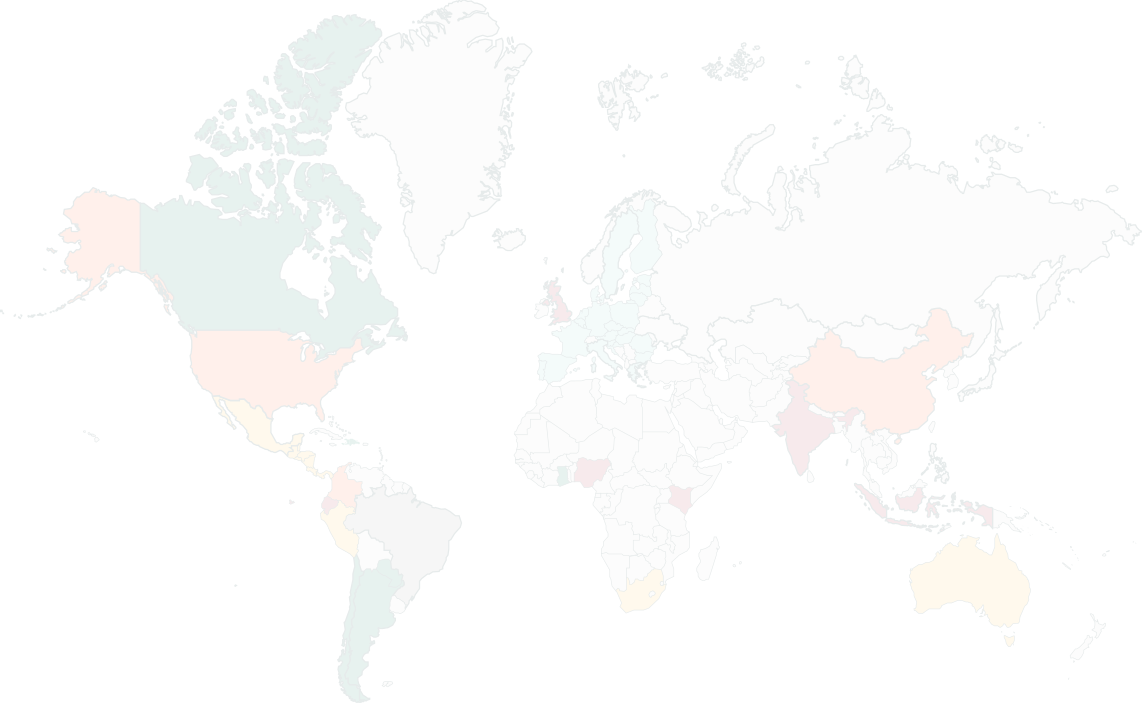
Global Foodbanking Network map Global Foodbanking Network map with key

Mapping food donation policies around the world

The Atlas evaluates laws and policies across the most relevant issue areas relating to food donation and food loss and waste. Explore the map to compare and contrast existing legislation and learn from best practices around the world.

Explore Interactive Map

Learn more about The Atlas and how to support this work.

Page with Checkmark Icon
About Us

Learn about the project and the partners behind this flagship research.

Methodology

Read our detailed project methodology rooted in inclusion, accuracy, and transparency.

Communication bubbles icon
Contact Us

Connect with our project team and learn about opportunities to join and support our work.